Flying internationally with a large dog is one of the most stressful parts of expat life, but it is entirely possible with the right preparation. In the summer of 2022, our dog Buddy took two flights with us to get from Jeju Island, South Korea, to Ho Chi Minh City, Vietnam. Buddy was a 12-year-old border collie mix, and we should have considered getting him his own frequent flyer card, as he had now been on 10 different flights.
Whether you are navigating the paperwork at Jeju Airport or trying to figure out which airline will actually accept a large crate, this guide covers the exact steps we took to get Buddy safely to his new home in Saigon. Although moving to Vietnam with a large dog can be stressful, I hope our experience helps you plan for yours!
Key Requirements at a Glance
| Requirements | Details |
|---|---|
| Airlines | – Determining possible airlines – Flight date availability for pet – Airline-approved flight crate |
| Pet Export Requirements | – Vet paperwork from South Korea – Animal Quarantine Office paperwork |
| Pet Import Requirements | – Pet import certificate |
| Pet Transportation | – Pet-friendly taxis in South Korea – Pet-friendly taxis in Vietnam |
While we are getting used to the process for him to fly, it still takes some planning. Anytime that we are preparing for Buddy to fly, we first go over his travel list:
The Planning Phase: 8 Questions Every Pet Owner Must Answer
- 1. Flight Logistics: Which airlines allow large dogs as “Pet in Hold”?
- 2. Korea Export: What paperwork is required to leave South Korea?
- 3. Vietnam Import: How do I secure a Vietnam Pet Import Certificate?
- 4. Jeju Transport: Where can I find a pet-friendly jumbo taxi on Jeju Island?
- 5. The Airport Transfer: How do I get a large dog from Gimpo to Incheon?
- 6. Potty Breaks: Where are the pet relief areas at CJU, GMP, and ICN?
- 7. Saigon Arrival: What is the best pet-friendly taxi in Ho Chi Minh City?
- 8. Settling In: Where are the best pet-friendly hotels in Saigon?
And… let the planning begin.
1. Which Airlines Allow Large Dogs from South Korea to Vietnam?
This was a no-brainer for us. South Korea has two excellent airline options when travelling with pets accompanied as “excess baggage”: Korean Air and Asiana Airlines.
Booking with Korean Air (Jeju to Seoul)
We booked our domestic flight from Jeju to Seoul (GMP) via Korean Air. In order to reserve a spot for Buddy, I called the customer service ahead of time to see which flight options are available for him. This is because not all aircrafts will accept pets in cargo as excess baggage, and for the ones that do, there are limited spots available.
I noted the dates/flight times that had spaces for him, and I cross-checked the flights that I would be able to make as well. After I booked my ticket, I simply called the customer service back, and Buddy was then confirmed on the flight too!
Buddy’s “Pet In Hold” charge came to 60,000 krw (Jeju – Seoul GMP), and I paid this amount when I checked in at the counter on the day of my flight.
Booking with Asiana Airlines (Seoul to Ho Chi Minh City)
For our international flight from Seoul (ICN) to Ho Chi Minh City, we booked with Asiana Airlines. Again, I went through the process of calling ahead of time to see which flight options were available for Buddy. After I purchased my ticket, I called their customer service back, and Buddy was booked for his international flight!
Buddy’s international “Pet in Hold” charge came to 440,000 krw (Incheon – Ho Chi Minh City), and this was paid at the check-in counter on the day of my flight.
2. What Paperwork is Needed to Leave South Korea?
There are three main documents that you will need in order to export your dog from South Korea.
- Vaccination and Inspection Veterinary Form from your Vet
- Health Certificate for Animal Quarantine from the Animal Quarantine Office (at Jeju Airport)
- Designation of Representative Form from the Animal Quarantine Office (at Jeju Airport)
From Your Vet
- Health Certificate
Within 10 days of travelling, you need to have your vet complete the Health Certificate in order for your pup to travel. This does not mean that you only need to start this process within 10 days, as we needed to ensure that Buddy had the following:
- Rabies vaccination updated (More than 30 days, but less than 1 year old)
- Microchip number
- Other vaccination requirements (this depends on the country that you are going to. For Vietnam, we added his DHPL, this was not a requirement to enter the country
- No Titer test was needed for Vietnam (this can take up to 4 months to get before travel)
Your vet fills in all of this information for your pet and does a final health check. This document will need to be printed, and you will need it for the next step.
From the Animal Quarantine Facility (At Jeju Airport)
2. Health Certificate & Designation of Representation Form
After you have the Health Certificate completed, you will need to submit it to an Animal Quarantine Facility to receive your stamped export certificate. You can go to Jeju Airport to get this document completed. Sometimes these facilities ask to see your dog and the dog crate. We brought Buddy to Jeju Airport two days before his flight to get his paperwork all prepared; however, I believe you could even do this the day of, just by arriving early to the airport.
Additionally, we filled in a Designation of Representative Form, which just adds the owner’s information to the pet export paperwork.
3. How do I get a Vietnam Pet Import Certificate?
We contacted Saigon Pet Hospital ahead of time to receive the import certificate. To get this, we had to provide the following information:
- Owner’s passport information
- Flight ticket/itinerary
- South Korea Export Paperwork (Health Certificate from Jeju Airport)
- South Korea Vaccination and Inspection Paperwork (from your vet)
The import document cost $250USD, and it was an additional $50USD as we landed after 4 pm.
Upon arrival AFTER we exited the airport, we met with the Saigon Pet Hospital employee in the waiting area outside, where we received the Vietnam import certificate. When we landed in Vietnam, we did not have to “declare” anything, and we simply walked out of the airport with no one checking our export paperwork from South Korea.
Note: In our experience, when you enter countries with your pet, you need to “Declare” your animal; however, we asked an official at Ho Chi Minh City airport, and we were informed that we did not need to. This may be different on your arrival!
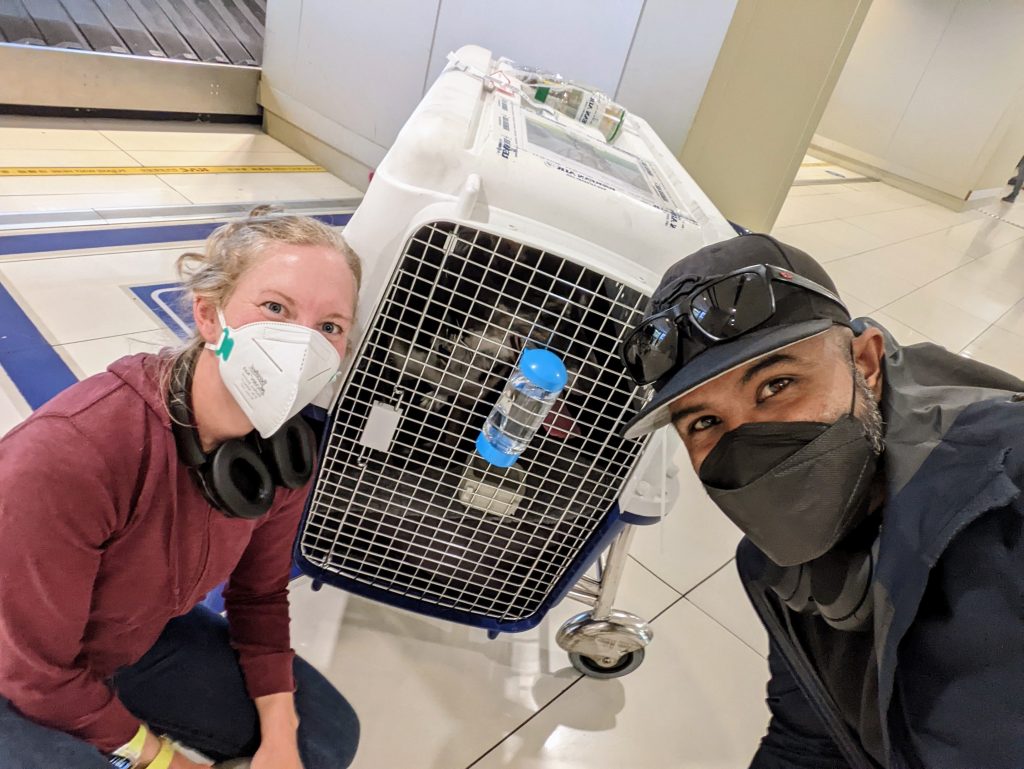
After flying internationally with a large dog, you might be wondering where you get reunited with your pet. Buddy arrived next to the luggage belt in the airport. He stayed in his crate while we waited to collect our luggage, and then we were all set to exit the airport.
4. How to Book a Pet-Friendly Taxi on Jeju Island
Pet-Friendly Taxi on Jeju Island
There is not an abundance of pet-friendly taxis on Jeju Island, so we opted to book with Mr. Kang and reserved his jumbo taxi through the Kakao messaging app. This cost us 100,000 KRW for a one-way ride from the GEC (west Jeju) to the CJU airport. This taxi is extremely spacious and easily held Buddy and his crate, 2 passengers, and our six pieces of luggage!
5. How to Book a Pet-Friendly Taxi in Seoul
Gimpo to Incheon Airport Transfer
We booked our pet-friendly taxi transfer with Comfy Pet Chauffeur Service. I contacted them via Facebook, and they arranged to have a cargo van pick us up from Gimpo and drive us to Incheon Airport. This transfer cost us 60,000 KRW, and the van was big enough to hold a large dog crate, 6 pieces of luggage, and 2 passengers.
6. Where are the Pet Relief Areas at CJU, GMP, and ICN?
We had no issue finding pet relief areas at the airports during our travel day with Buddy. While we did not find specific designated spots (there could be), we asked the staff at the airport where we could go, and we never had any issues.
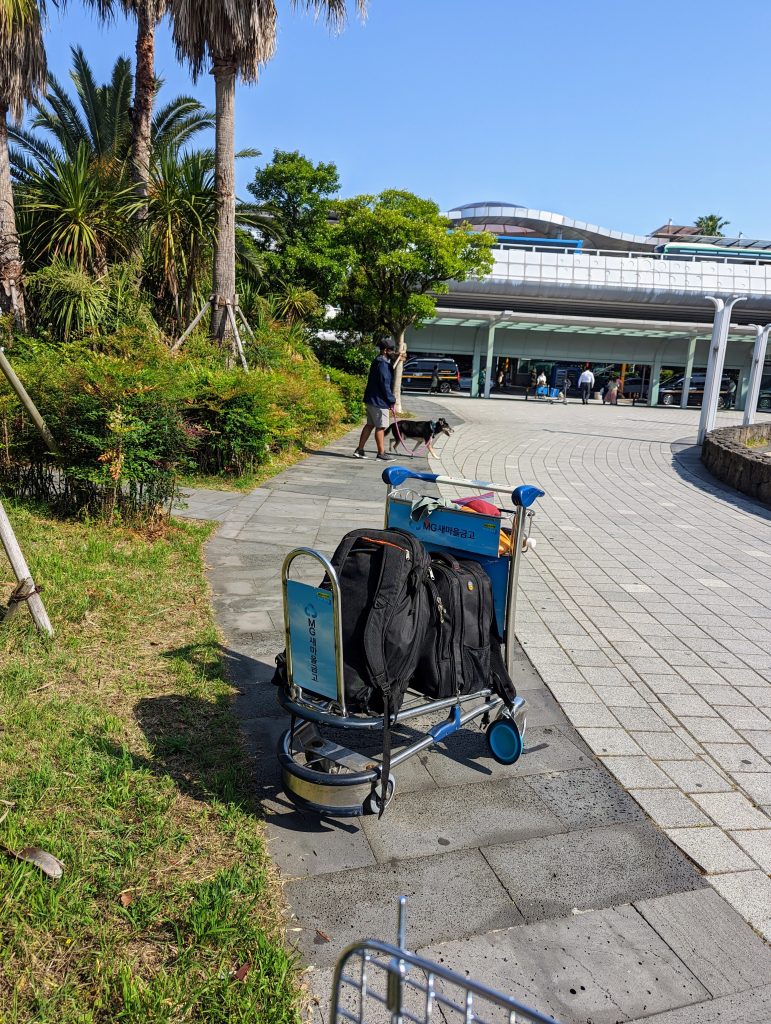
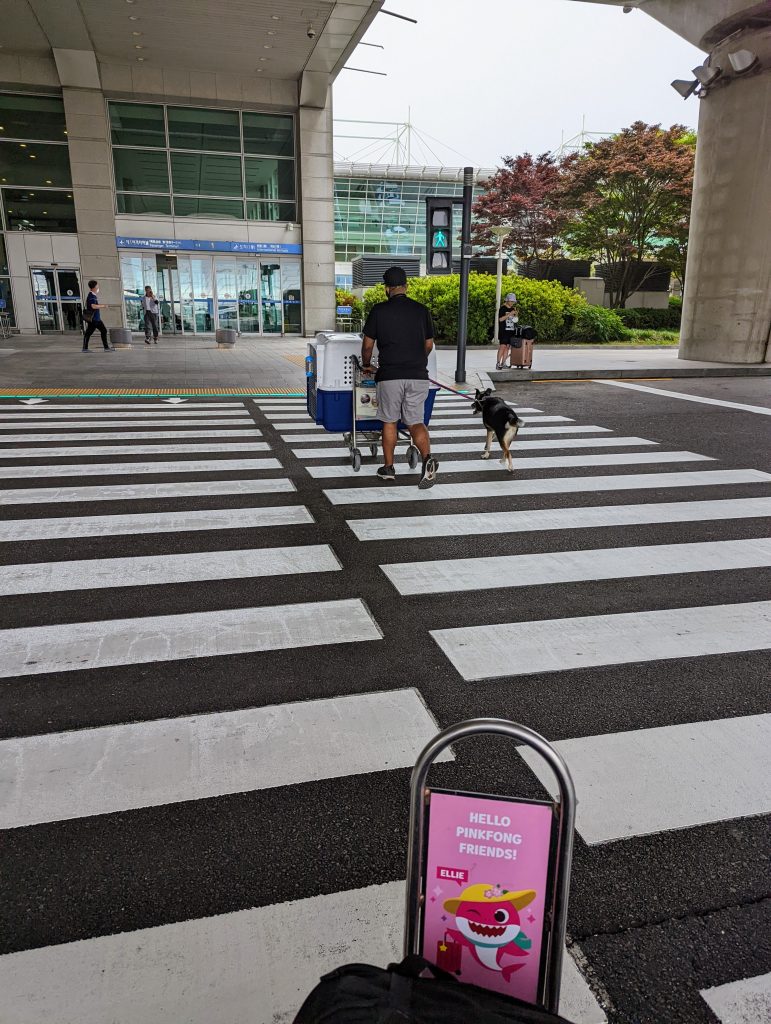
At the Jeju Airport, there is lots of green space across the street from the arrival area. Buddy was able to stretch his legs there with no hassle.
At Gimpo Airport, we did not opt to find an area as we immediately got into our transfer cargo van and travelled to the Incheon Airport.
At the Incheon Airport, there is some green space on the far end by the arrivals. There were also some benches across the arrivals street where we were able to sit with Buddy until it was time to check in for our flight.
7. Arriving in Saigon: Pet Taxis
While we did not need to book a pet-friendly taxi in Ho Chi Minh City as we had private transport arranged, you can contact Clown Car Vietnam on Facebook. They have taken us on multiple trips to the vet/pet hotel here in Ho Chi Minh City, and they were our “go-to” pet transit service. While we were considering moving to Vietnam with a large dog, this was definitely something we were wondering about, and overall, we had a great experience booking with Clown Car Vietnam!
8. Arriving in Saigon: Pet-Friendly Hotel
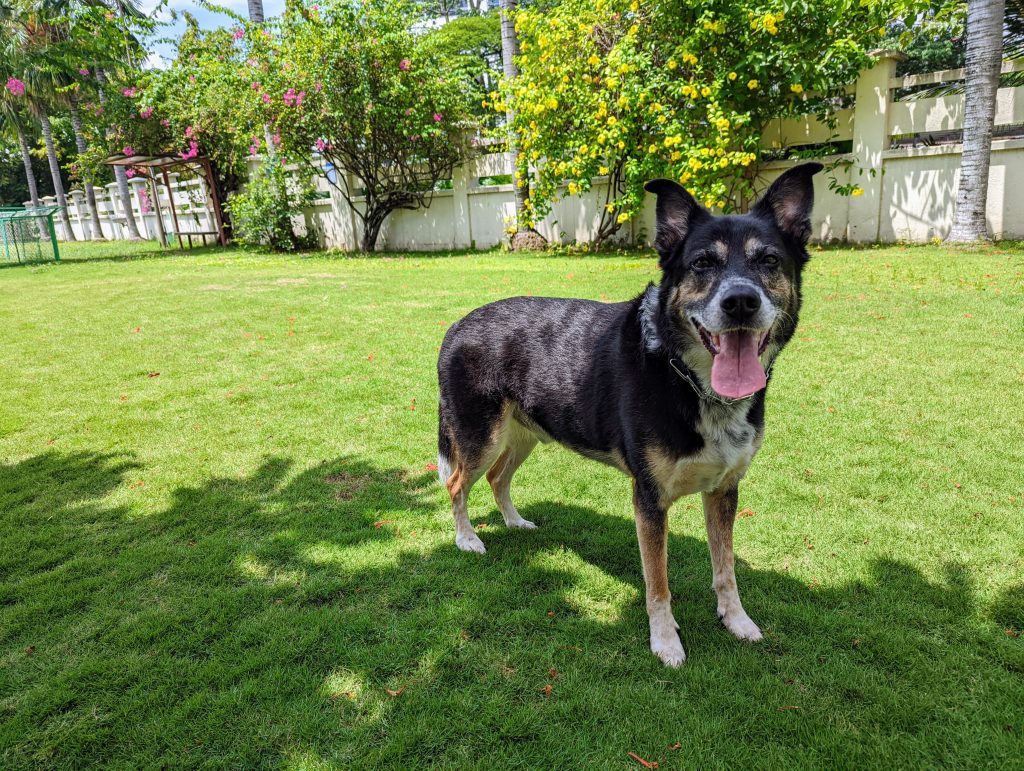
It is important to note that not all residential buildings/hotels are pet-friendly in Ho Chi Minh City. While we had about a week to find more long-term housing, we stayed at the Riverside Hotel in District 2 with Buddy for our first week in the city. This worked out great as they also have a little fenced-in dog park area and lots of paths to walk your dog!
A helpful website I often frequented was www.petravel.com, as it breaks down pet import and export requirements for different countries.
Additionally, contacting pet agents is also a great idea to get more information on the transport process, and they can also work with you to help transport your pet safely! Although we chose to fly with Buddy on our own when moving to Vietnam, we have worked with Professional Pet Relocation Agents before and would recommend them.
If you are looking for more information on pet travel and finding a pet-approved airline crate, check out this article.
Hopefully, this experience helps you to plan your travels when you are planning on flying internationally with a large dog!
Disclaimer: I am not a professional pet relocator—just a dog owner sharing my journey! This guide is based on our 2022 move; regulations change at any time. Before booking, always verify current requirements through official channels.
Example Resources:
- The Airlines: Contact Korean Air or Asiana directly for crate size and “Pet in Hold” availability.
- South Korea (Export): Check the Animal and Plant Quarantine Agency (QIA) website.
- Vietnam (Import): Consult a trusted pet hospital like Saigon Pet Hospital
- Professional Pet Relocators: Contact professional agents who specialize in pet transportation